
Case studyIllustrative write-up · no real client
From four tools to one order system
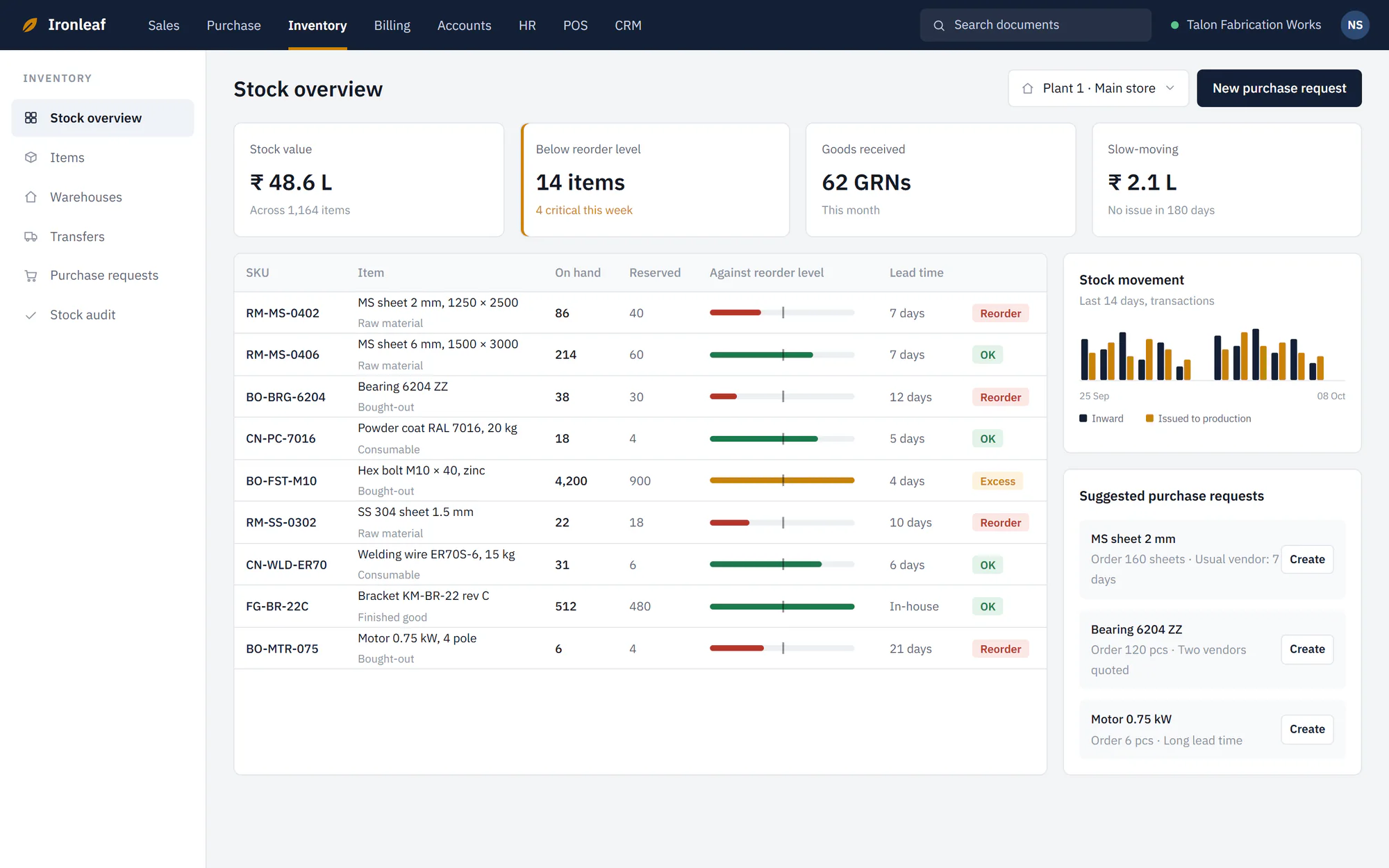
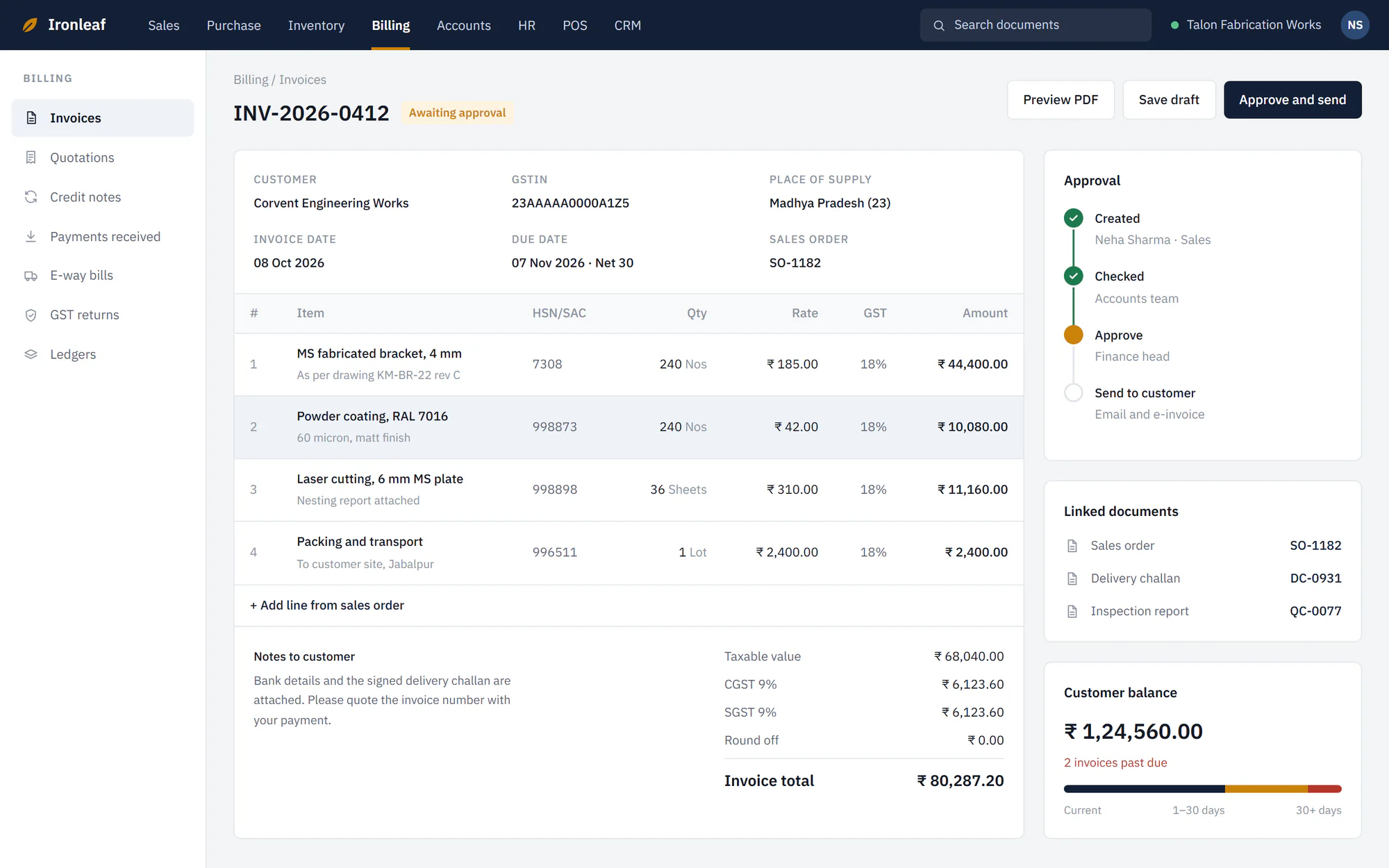
Orders, stock and dispatch notes in a single application, shaped around how a warehouse actually runs.
- Client
- None: illustrative
- Industry
- Manufacturing and distribution
- Screens from
- Ironleaf (concept)
01Challenge
The problem, as it was found
Orders arrived by email and chat, were tracked in a spreadsheet and re-keyed into a billing tool. Nobody could say with confidence where an order was.
- Order status lived in several places, and the places disagreed
- Stock was adjusted by hand after each dispatch
- Dispatch notes were rebuilt from scratch for every shipment
- Only two people understood how the tracking spreadsheet worked
Context
The business had grown past the point where a workbook could hold the operation together. Orders came through several channels, and each team kept its own view of the truth.
The warehouse team worked from shared desktops and phones, so the system had to be quick to use for people whose main job was not sitting at a computer.
02System
How it was put together
L1 · Views by role
Interface
- Order desk
- Warehouse view
- Manager reports
L2 · Rules live here
API
- Orders
- Stock
- Dispatch
- Roles and auth
L3 · One source of truth
Data
- Orders
- Stock levels
- Dispatch records
- Audit log
L4 · Existing tools stay
Integration
- Billing export
- Read-only API
Path through the system
- 1Order received
- 2Stock reserved
- 3Dispatch note created
- 4Shipment confirmed
- 5Billing handoff
03What was built
The parts, in the order they shipped
- 01
Order intake
One place to record an order, whichever channel it came from, with the customer and items validated at entry.
- 02
Status tracking
A single status for each order that every team reads from, with a history of who changed it.
- 03
Stock levels
Stock that moves when orders are reserved and dispatched, instead of being corrected afterwards.
- 04
Dispatch notes
Notes generated from the order record, so they are consistent and no one retypes them.
- 05
Billing handoff
An export and API the billing tool reads from, replacing manual re-entry.
04Decisions
The choices that shaped it
Decision 1
One order record, many views
Why
Every team needed a different screen, but a second copy of an order would recreate the original problem.
Trade-off
Views had to be designed carefully so no team felt they were using someone else's tool.
Decision 2
Roles before features
Why
Deciding who may change an order, and when, shaped the data model more than any screen did.
Trade-off
It slowed the first release slightly and avoided rework later.
Decision 3
Billing stays in its own tool
Why
The billing system already worked and the finance team trusted it.
Trade-off
An integration to maintain, in return for no migration risk on the finance side.
05Technology
What it was built with
- Frontend
- Next.jsReactTypeScript
- Backend
- Node.jsExpress.jsREST APIs
- Database
- MySQL
- Cloud and DevOps
- DockerGitHub Actions
06Outcome
Centralized a fragmented workflow into one application.
- Every team reads an order's status from the same record
- Stock reflects dispatches without manual correction
- The handover to billing no longer depends on re-typing
Demo case study. Outcomes are qualitative. No metrics, savings, revenue or user figures are claimed.
More case studies
Related
Related services
Have something worth building?
Tell us what you want to build. A short brief is enough to start the conversation.